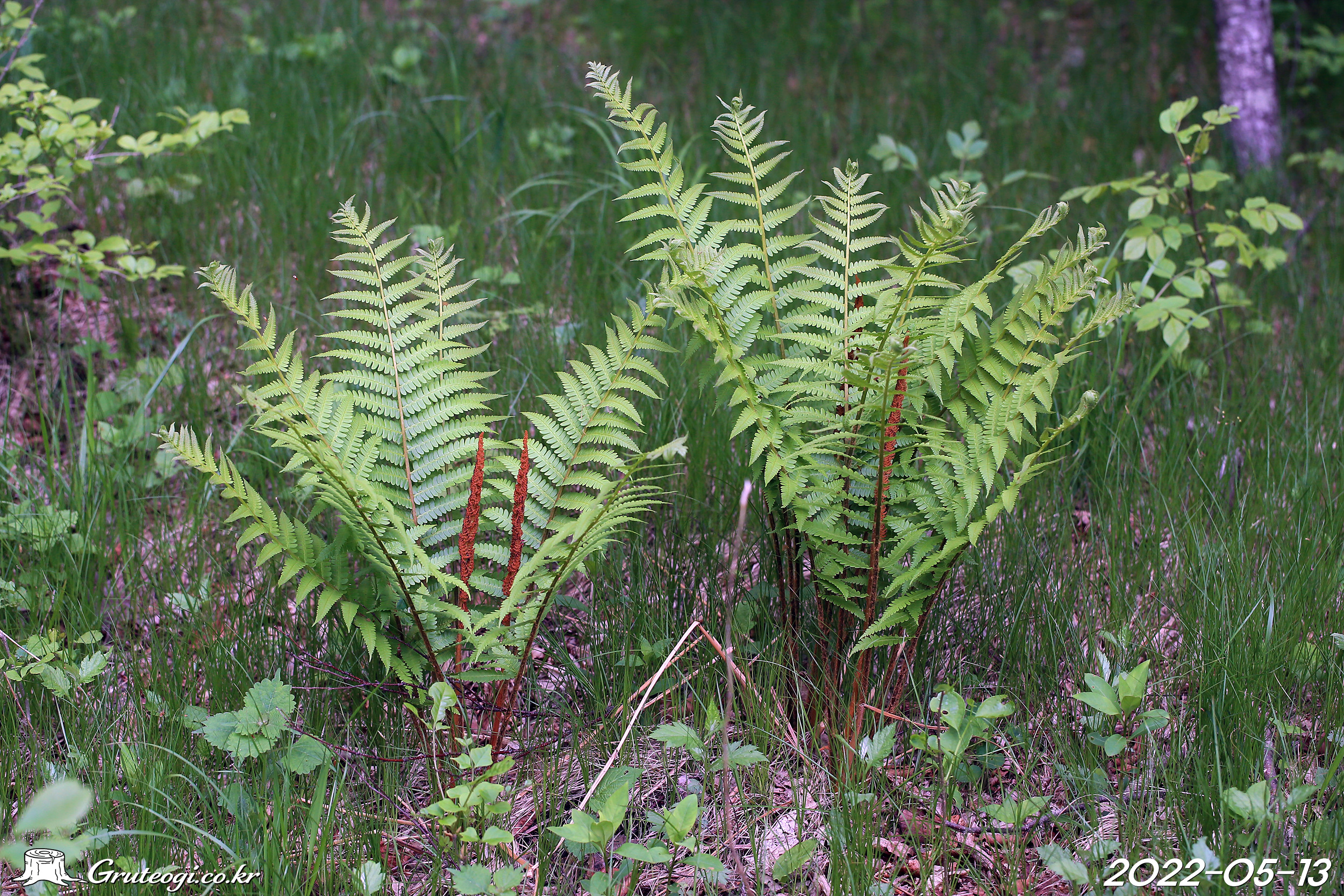
▪ Scientific name: Osmundastrum cinnamomeum (L.) C.Presl.
▪ Korean name: 꿩고비 (Kkwonggobi)
▪ Family: Osmundaceae
▪ Genus: Osmundastrum
▪ Distribution: It occurs throughout most of Korea and is also distributed in China, Japan, Taiwan, the Russian Far East, North America, Central America, and South America.
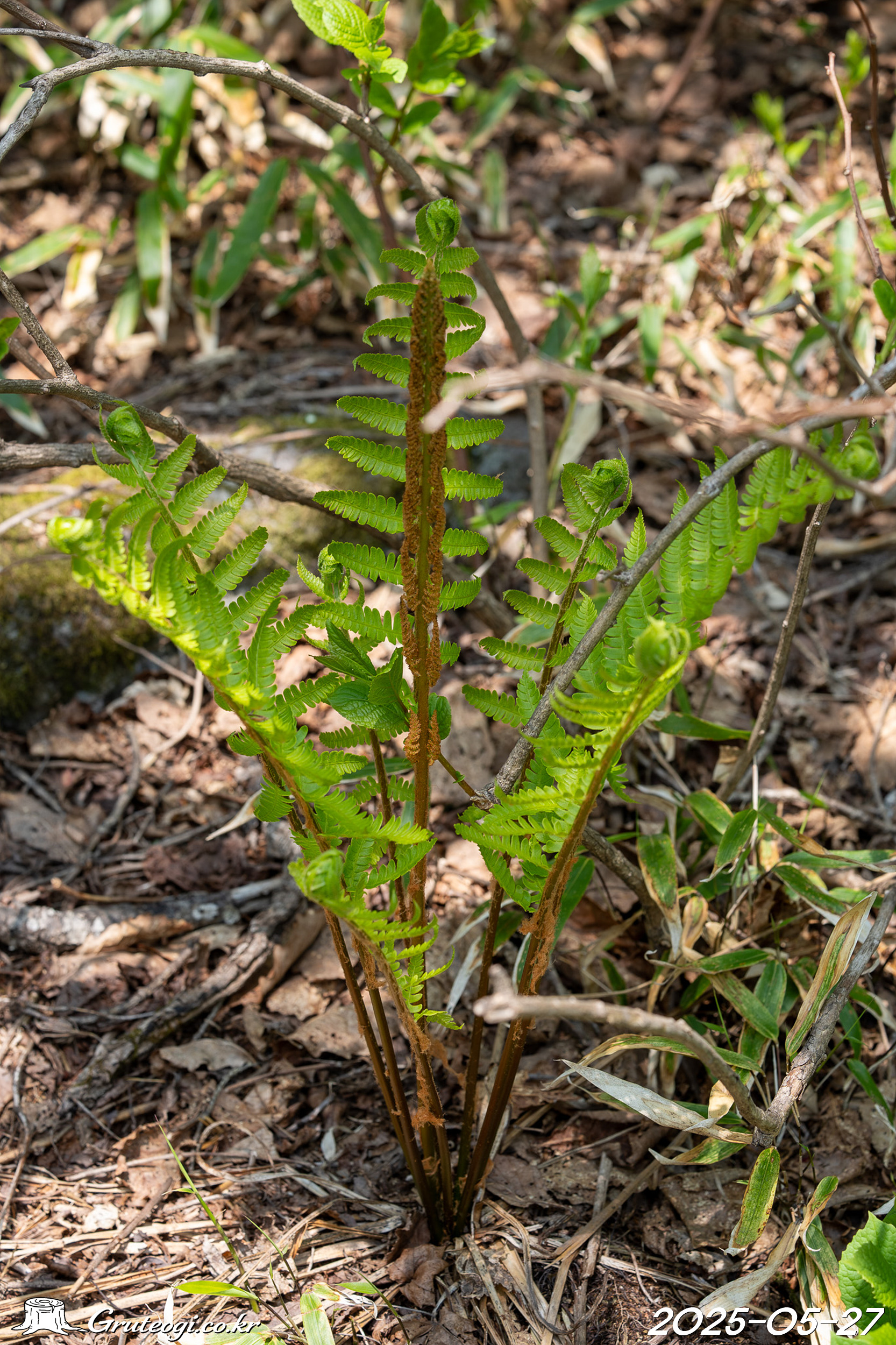
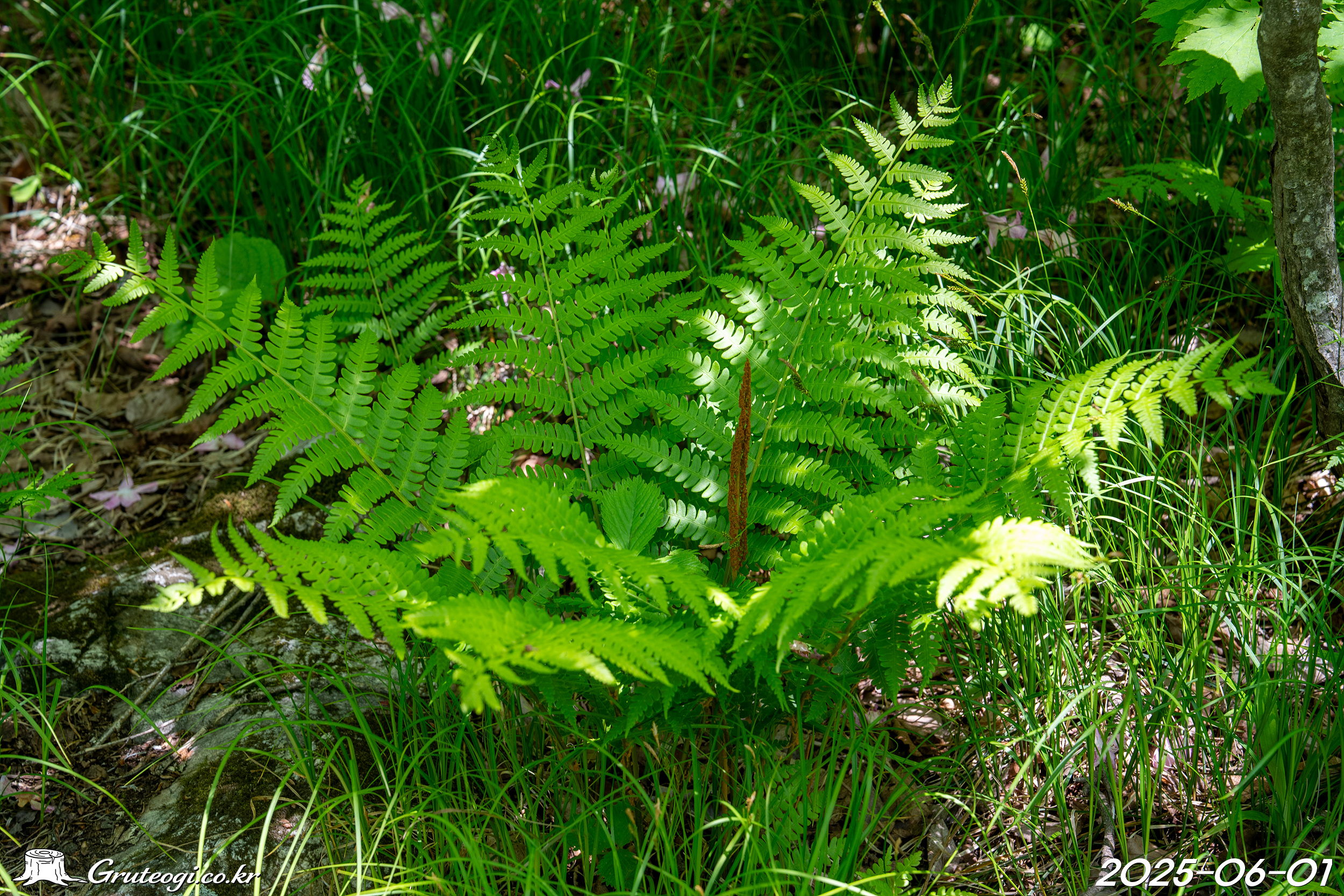
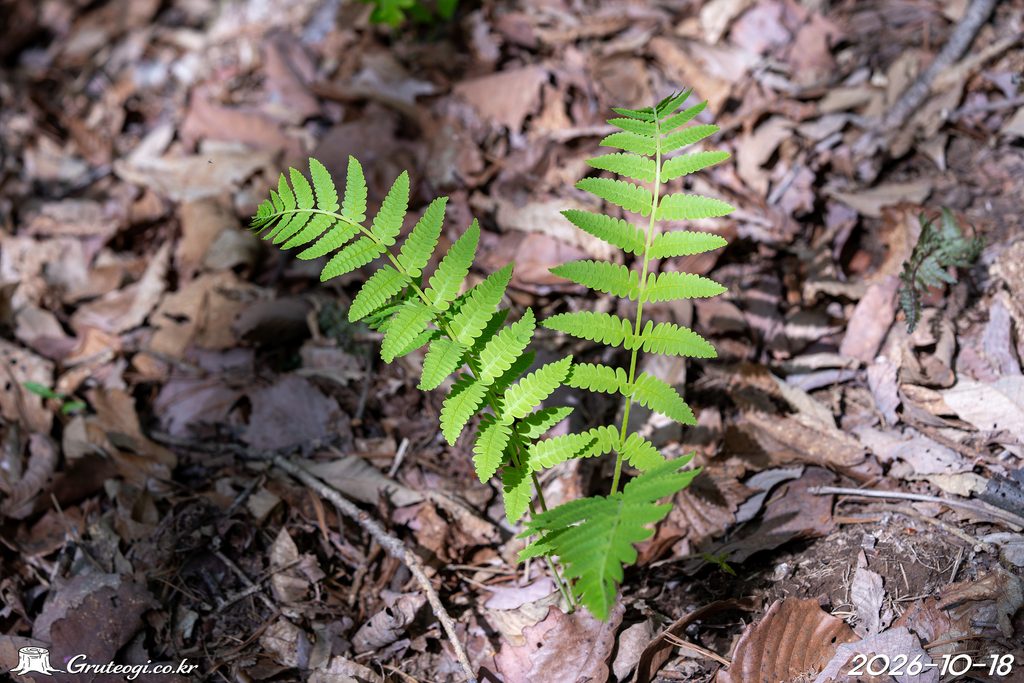
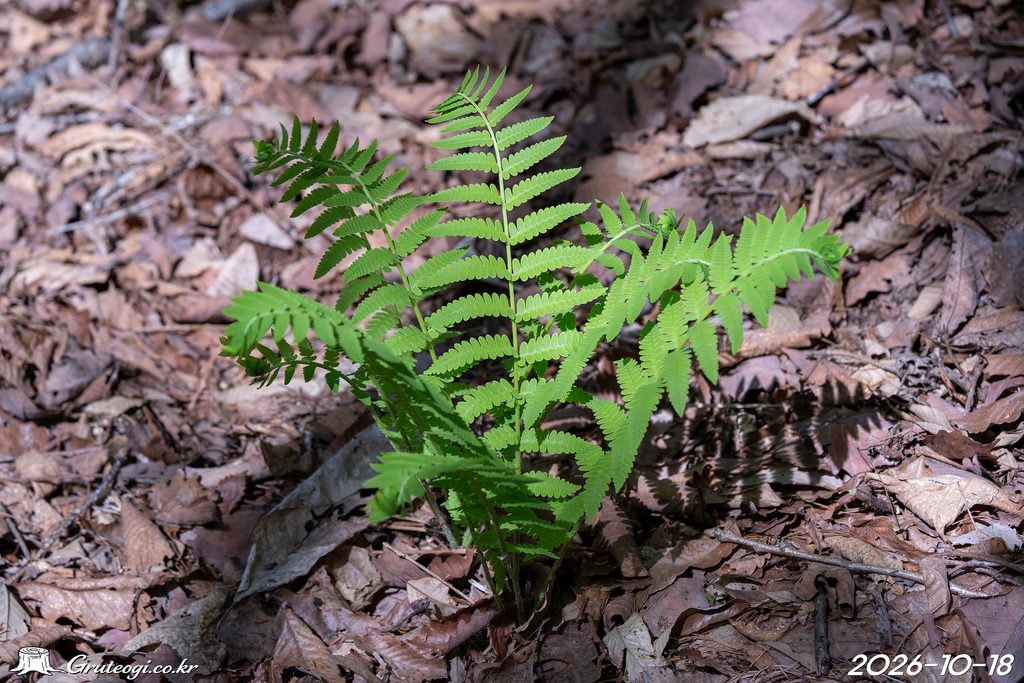
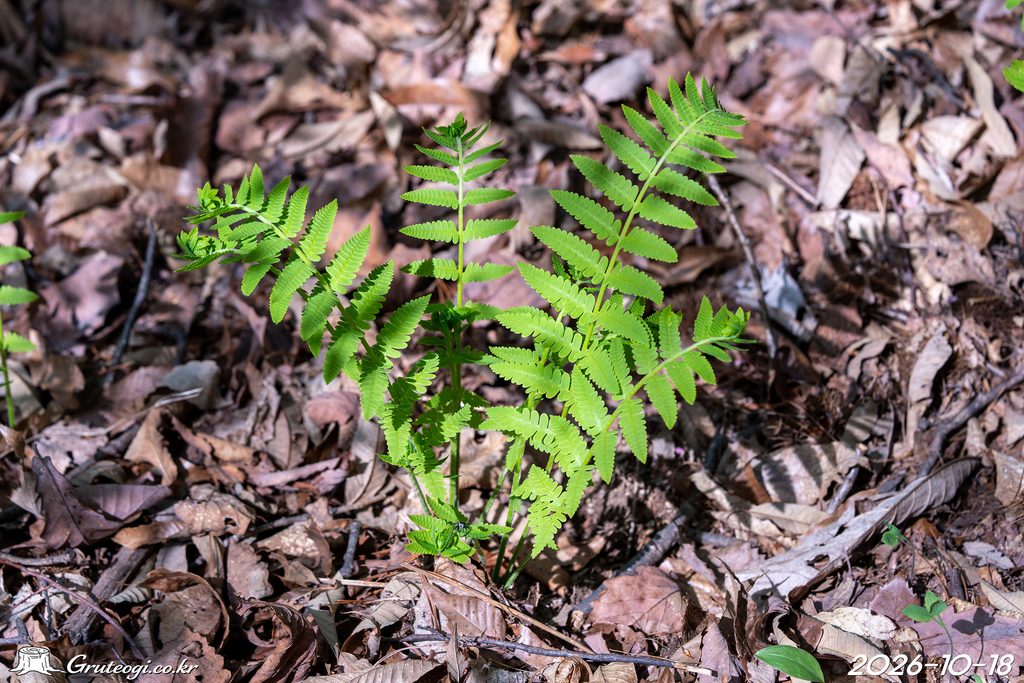
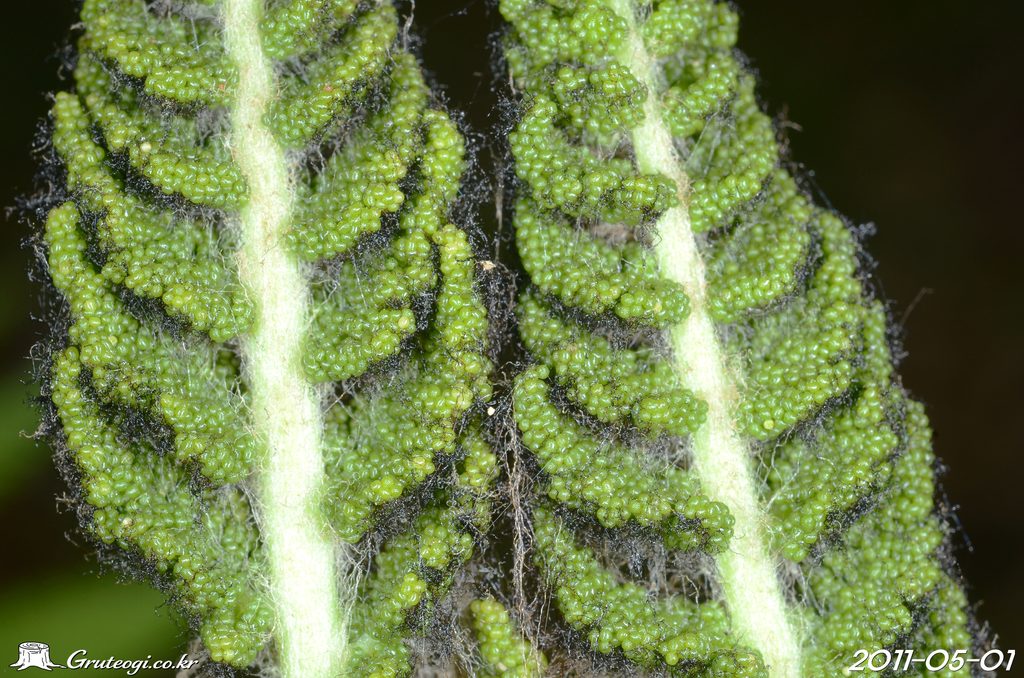
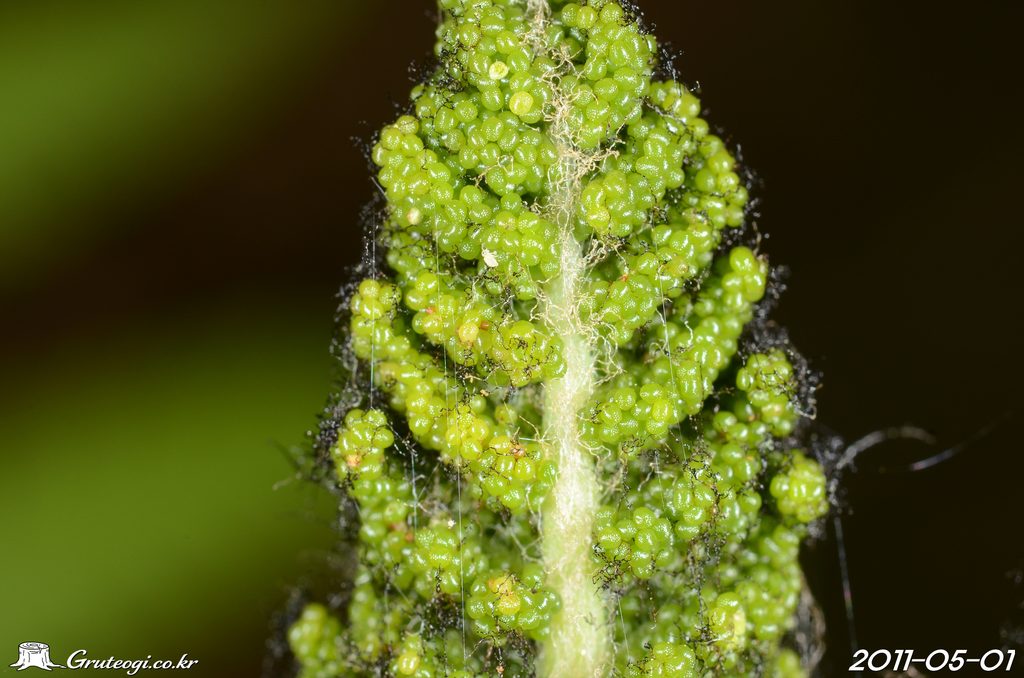
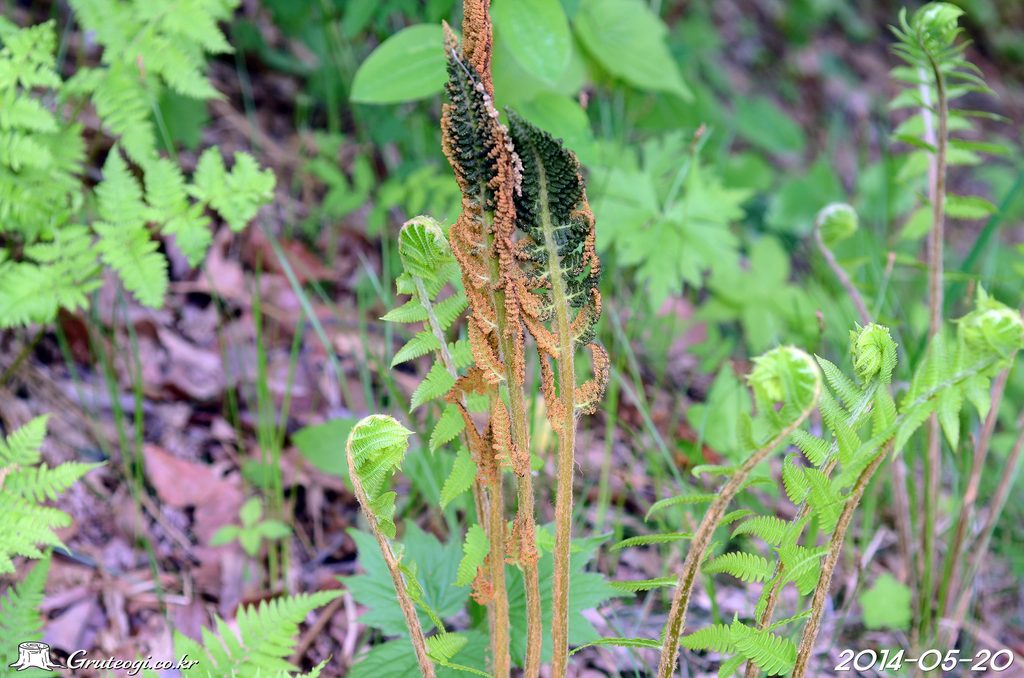
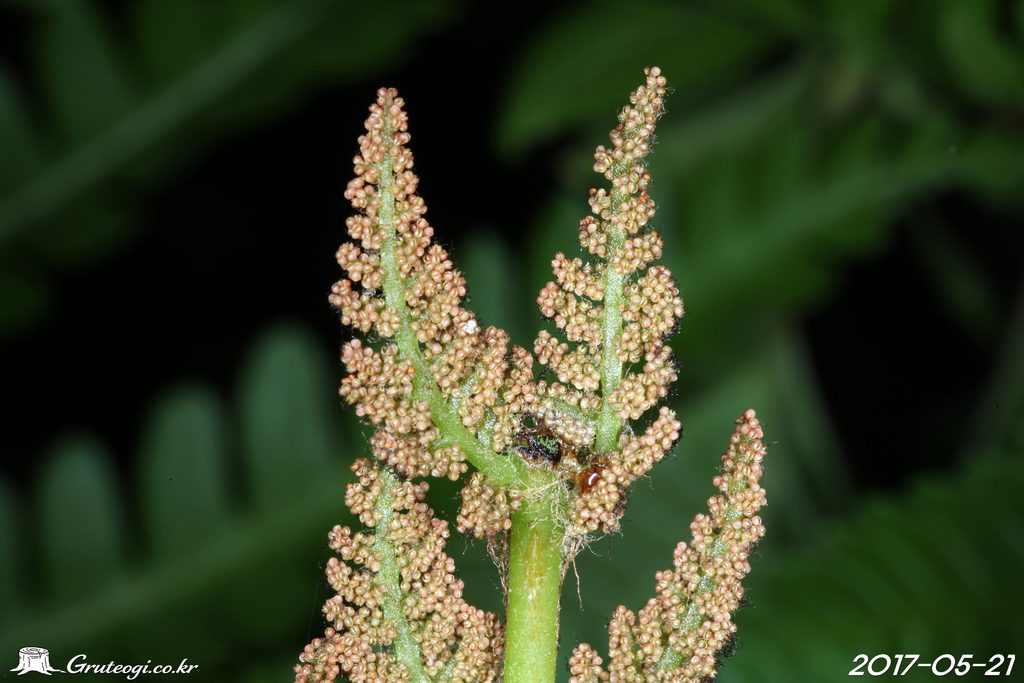
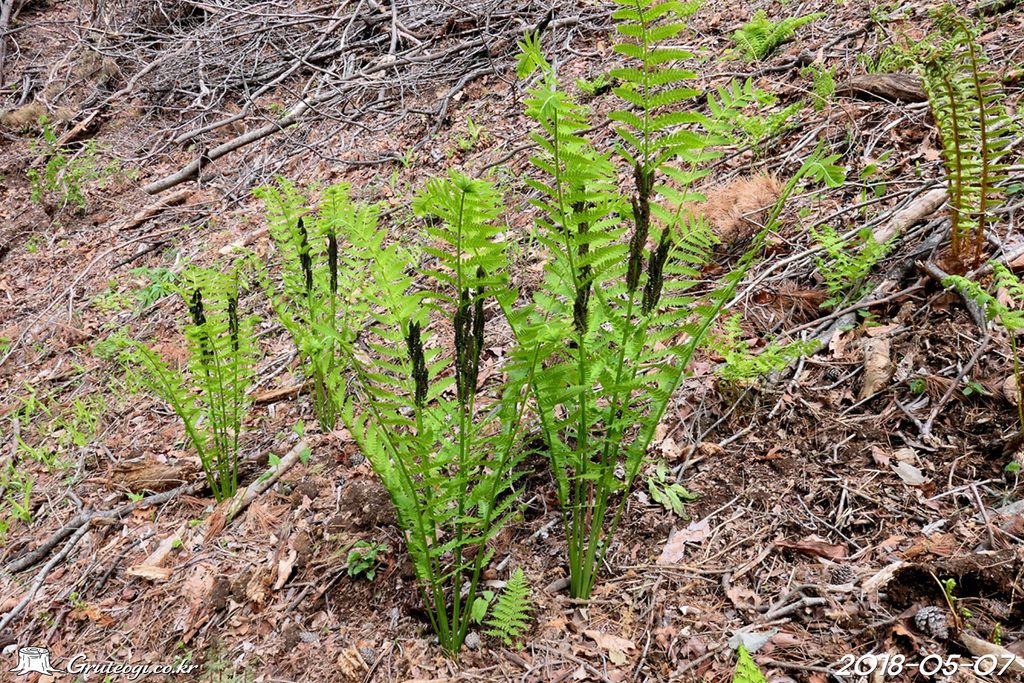
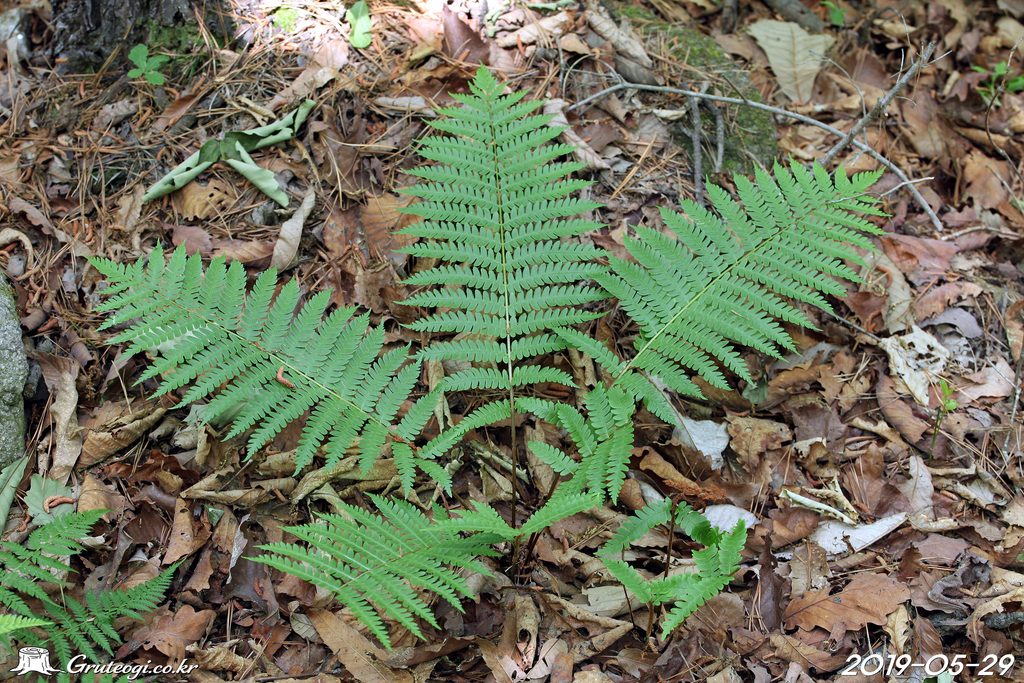
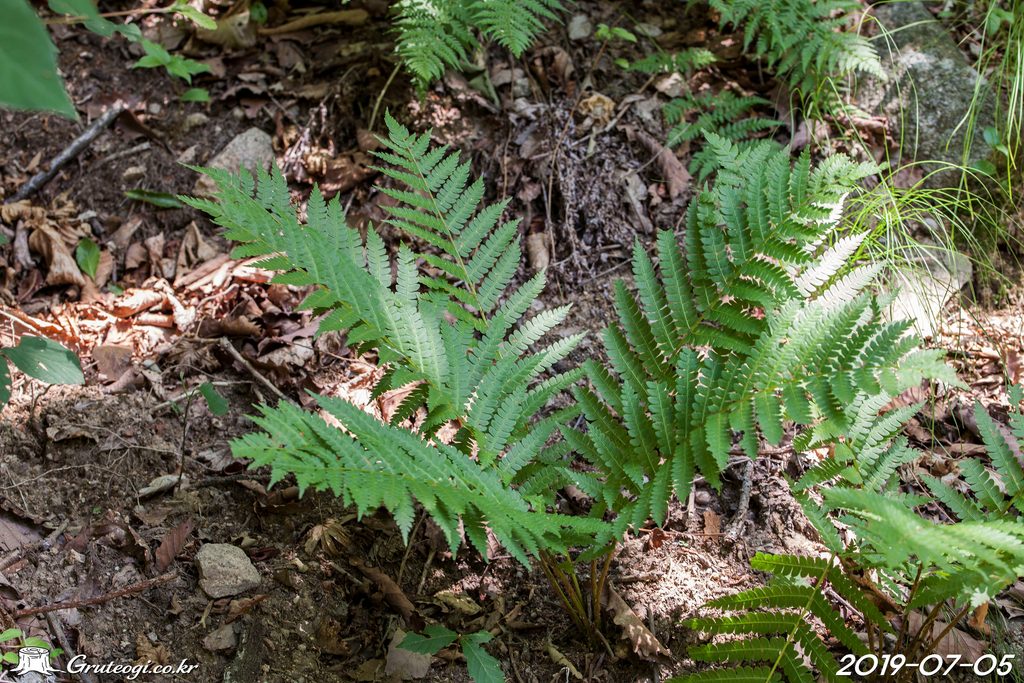
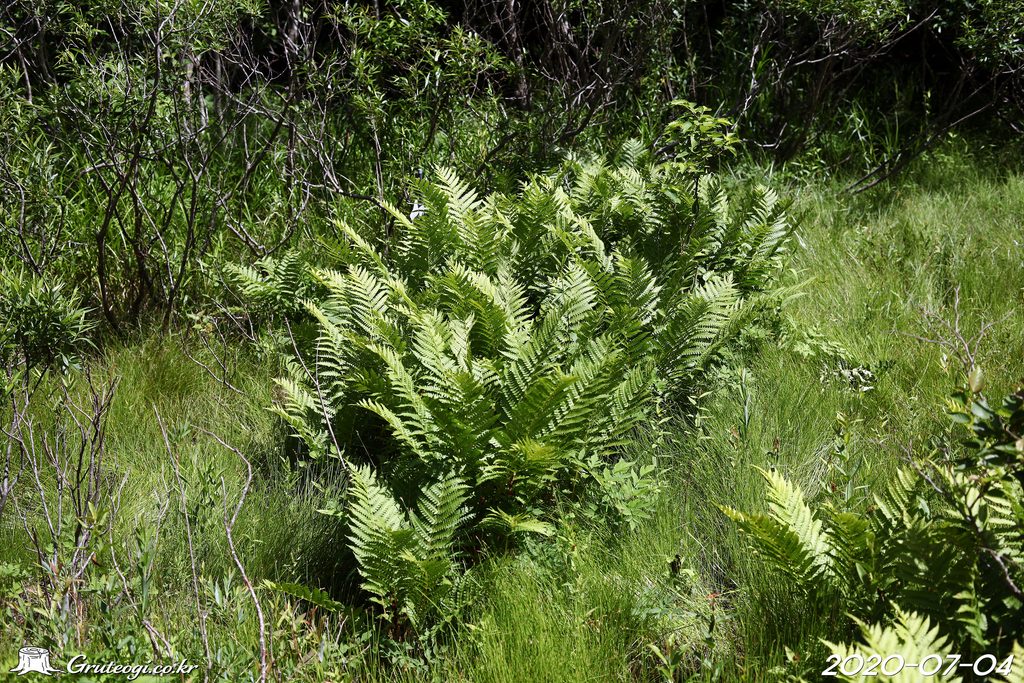
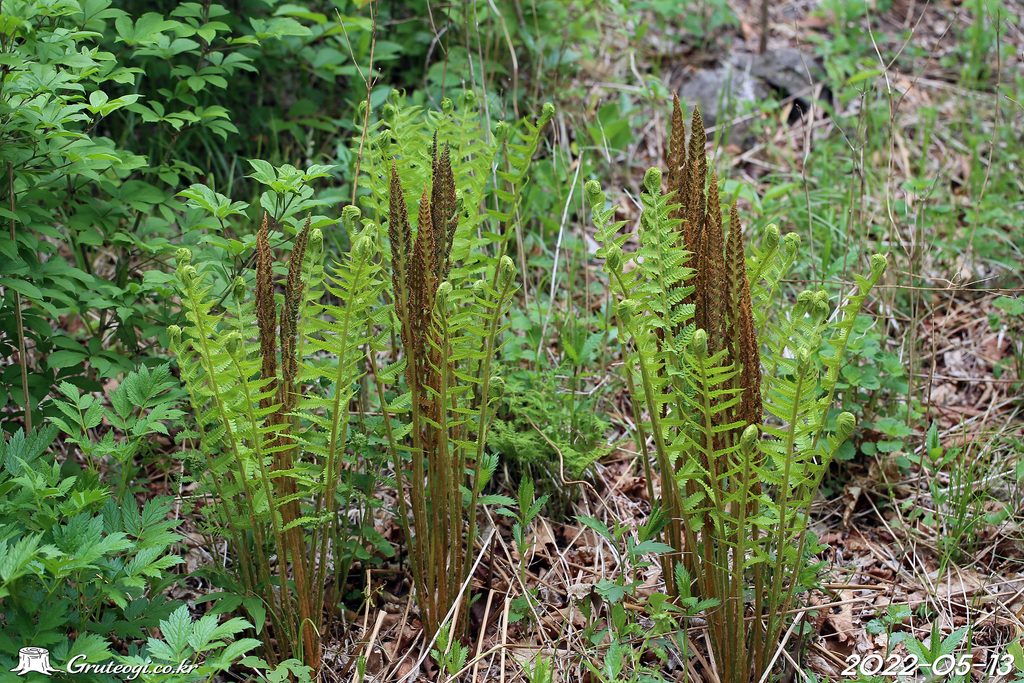
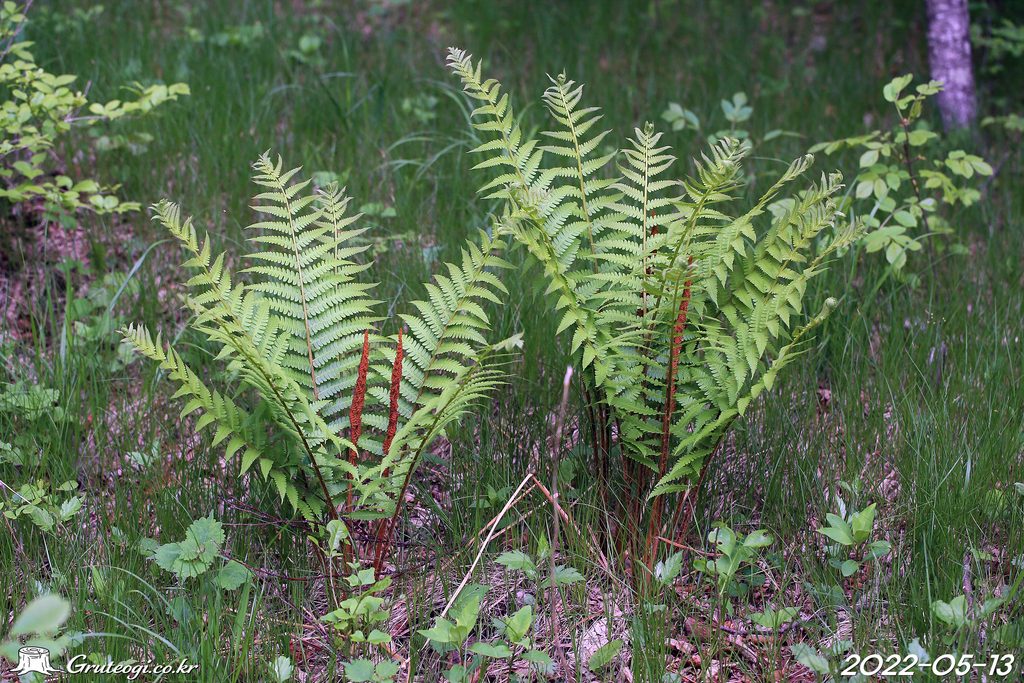
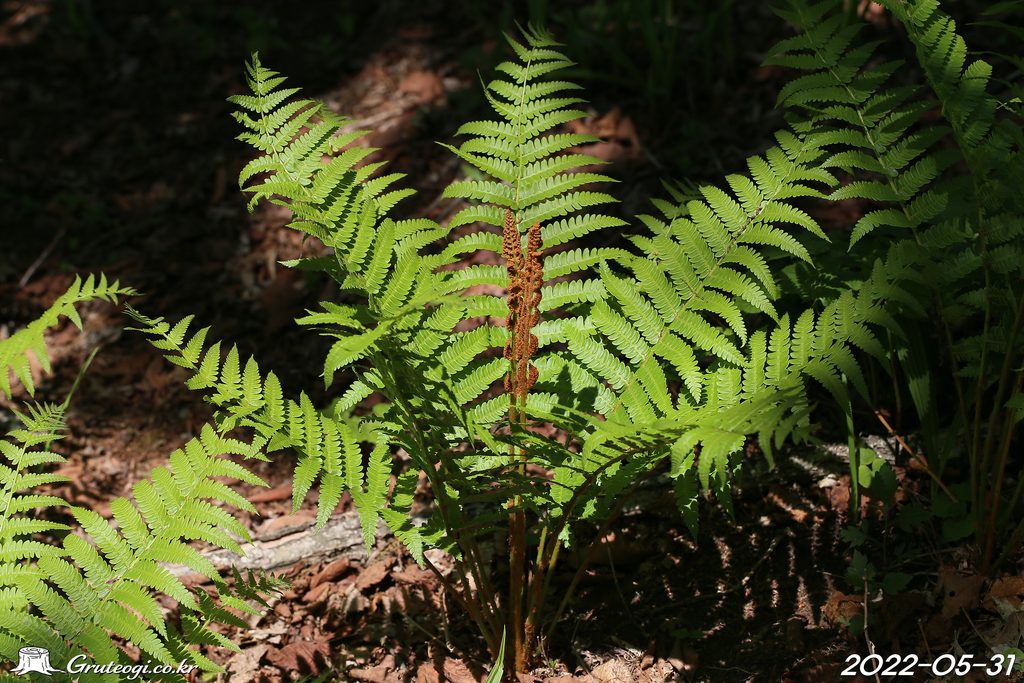
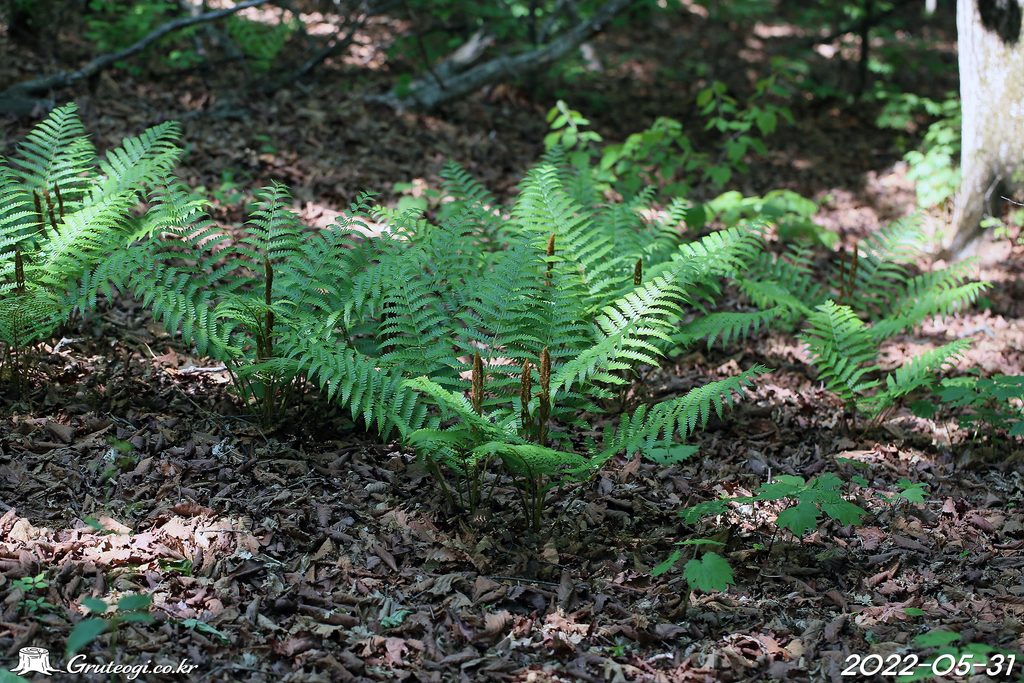
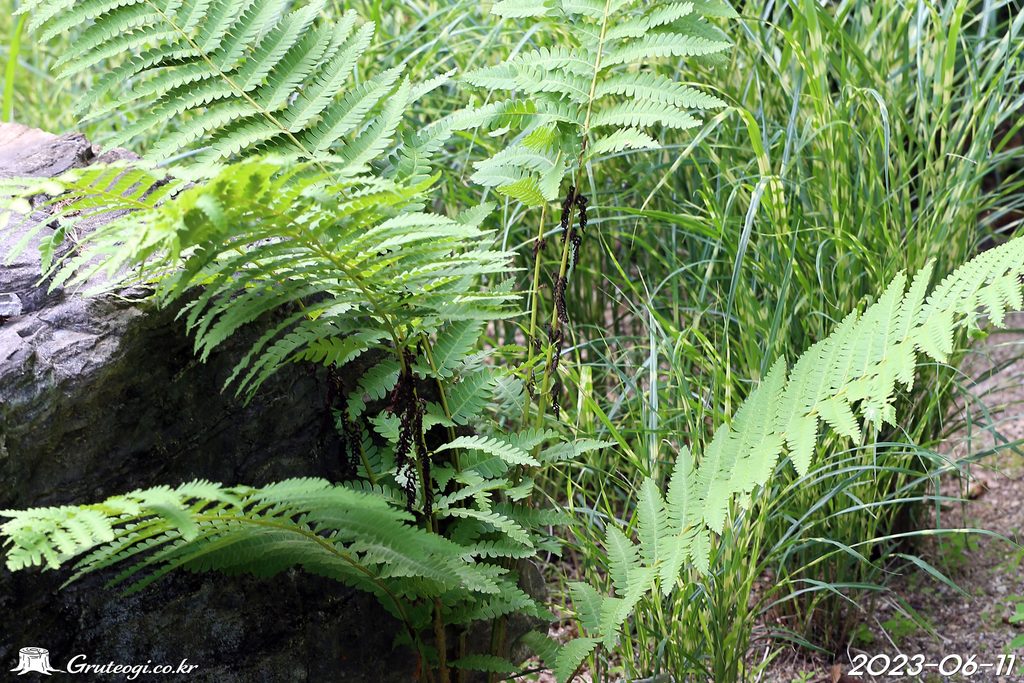
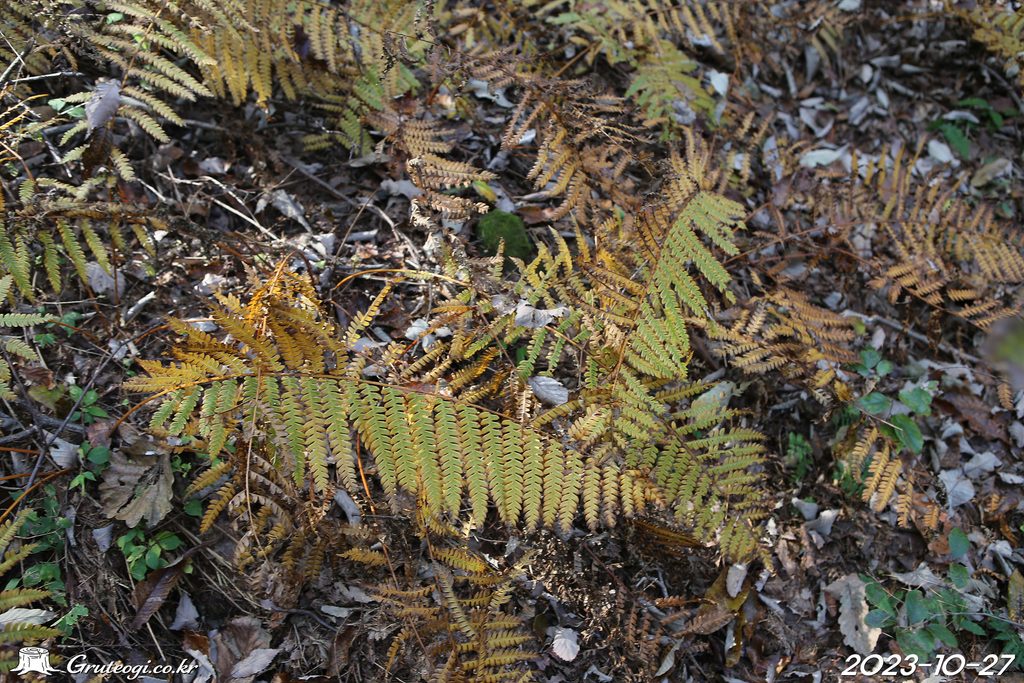
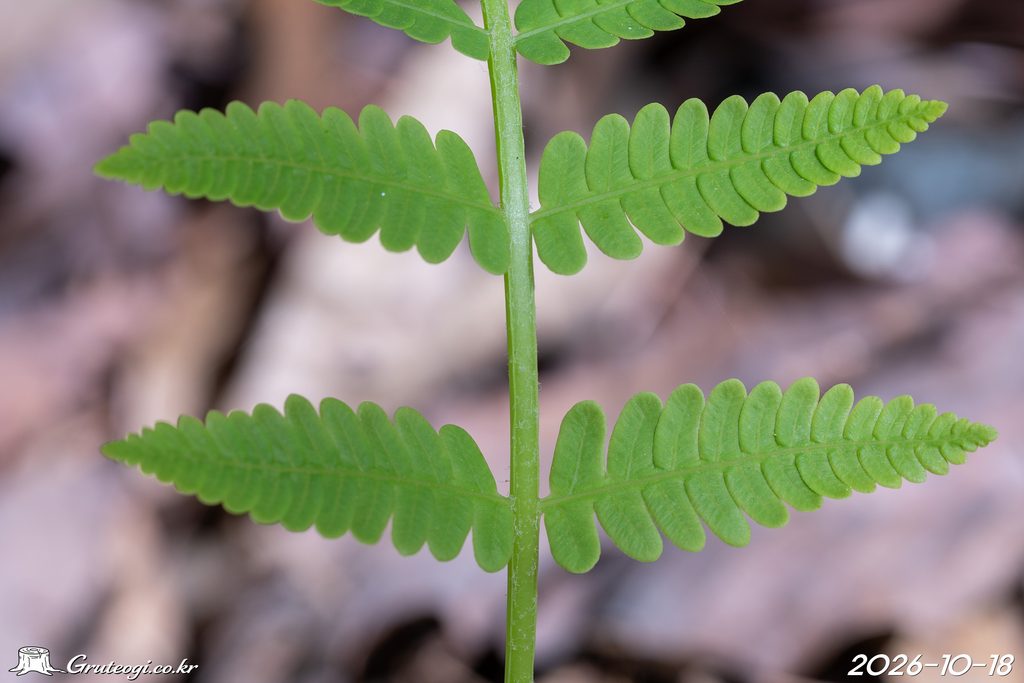
A summer-green, northern-affinity perennial fern growing in damp mountain forests or marshes. The rhizome is thick and firm. Leaves are dimorphic, consisting of sterile and fertile leaves. The petiole is slightly shorter than the blade and is covered with reddish-brown hairs when young, which are shed at maturity. Sterile leaves are ovate to lanceolate, once pinnate and deeply divided, 0.5–1 m long and 15–20 cm wide, yellowish green, and reddish-brown hairy when young. The sessile pinnae are attached at right angles, measure 5–17 cm long and 1.5–3 cm wide, and are pinnately divided into round-tipped, entire segments. Fertile leaves are shorter than sterile leaves. The reddish-brown sporangia lack an indusium and annulus and split longitudinally.
■ 사진
■ 학명
Osmundastrum cinnamomeum (L.) C.Presl.
■ 국명
꿩고비 (Kkwonggobi)
■ 분류
Family: Osmundaceae 고비과
Genus: Osmundastrum 꿩고비속
■ 특징
식물구계학적 특정식물 Ⅱ등급
습지선호도: 임의습지식물
수생형: 습생
■ 형태
▪ Habit
– 산지 숲속의 음습한 지역이나 소택지에서 자라는 여러해살이 하록성 북방계 양치식물이다.
▪ Rhizome
– 땅속줄기는 두껍고 견고하다.
▪ Leaf
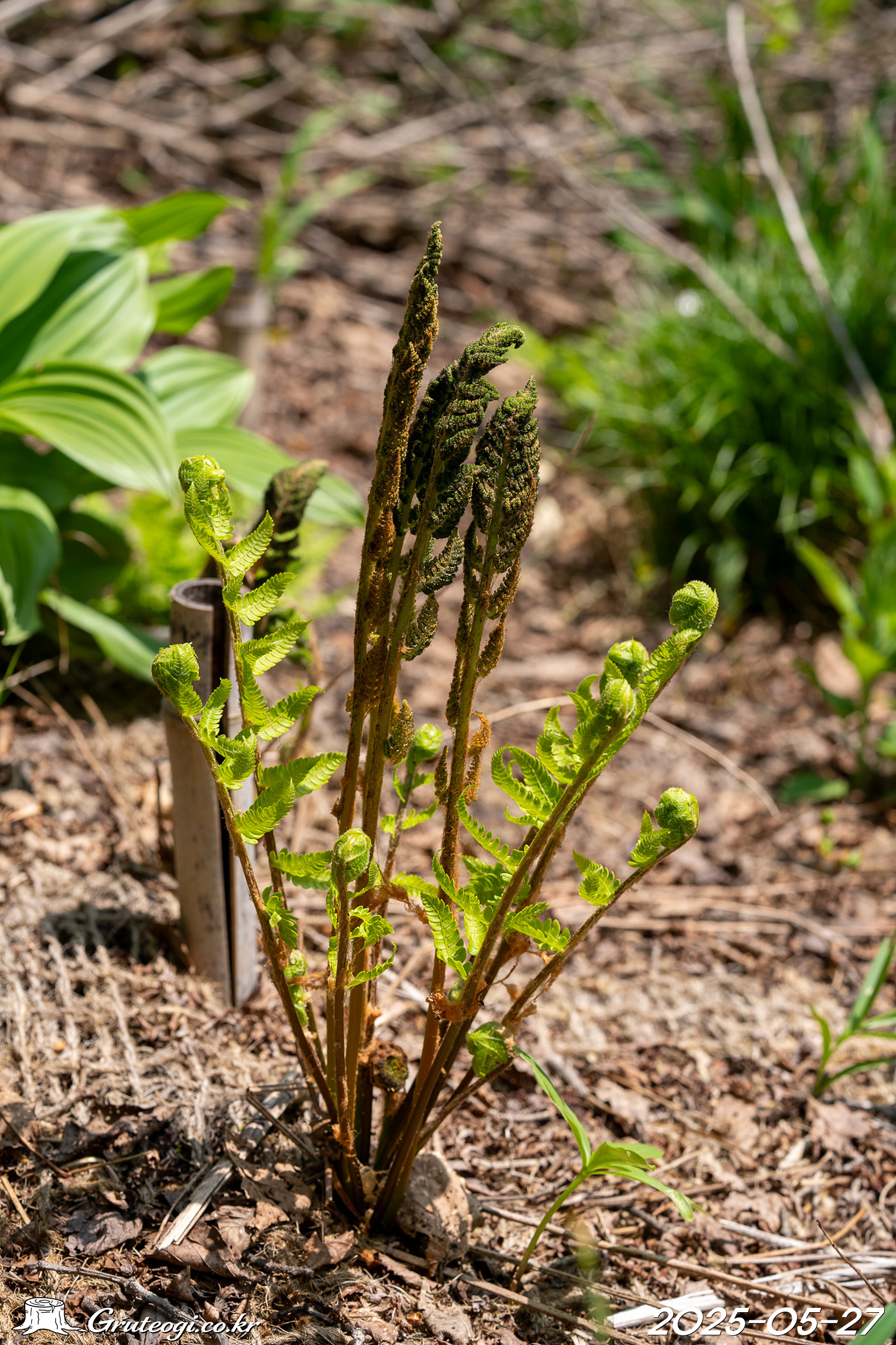
– 잎은 영양잎과 포자잎의 두 종류로 구분된다.
– 잎자루는 잎몸보다 약간 짧다.
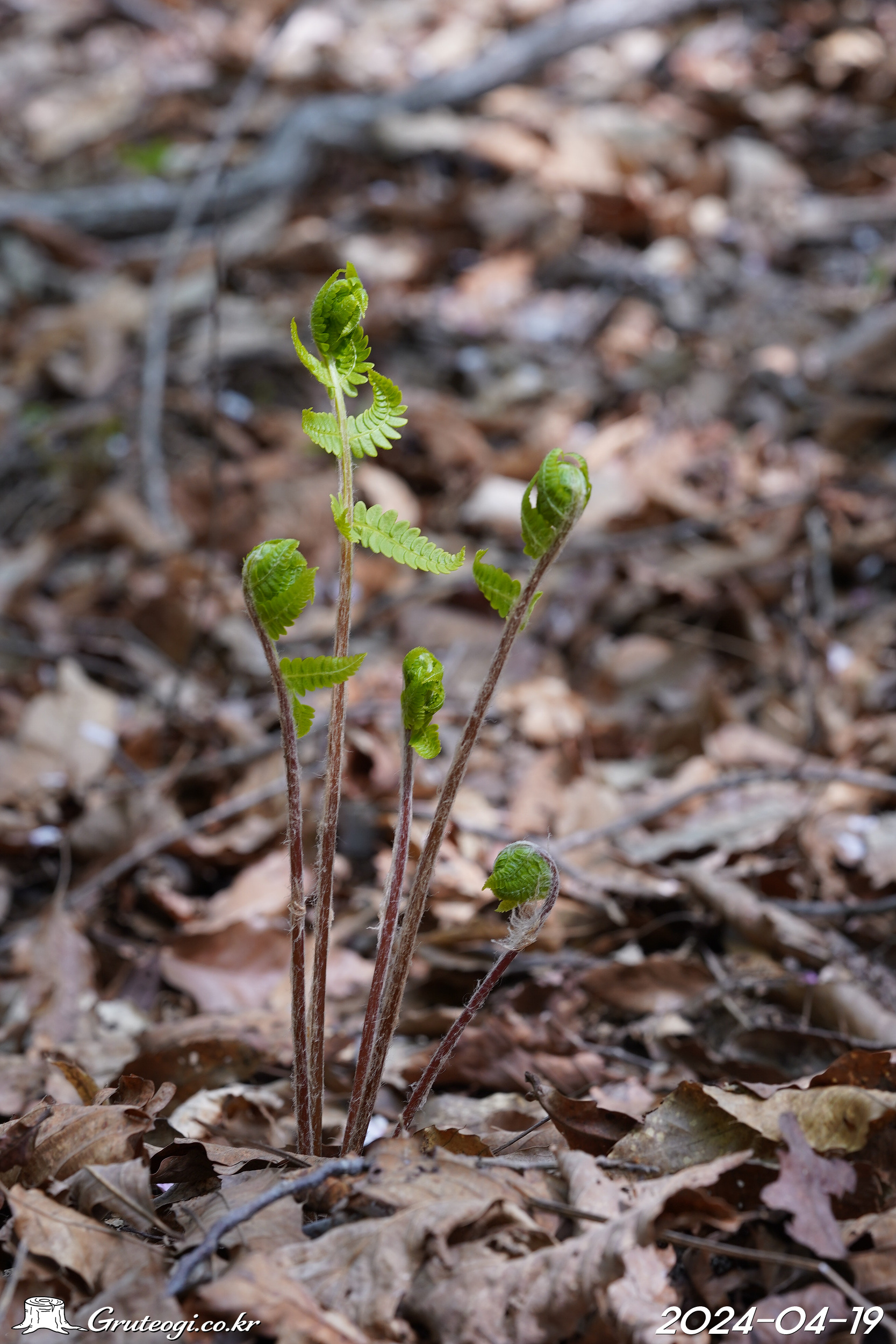
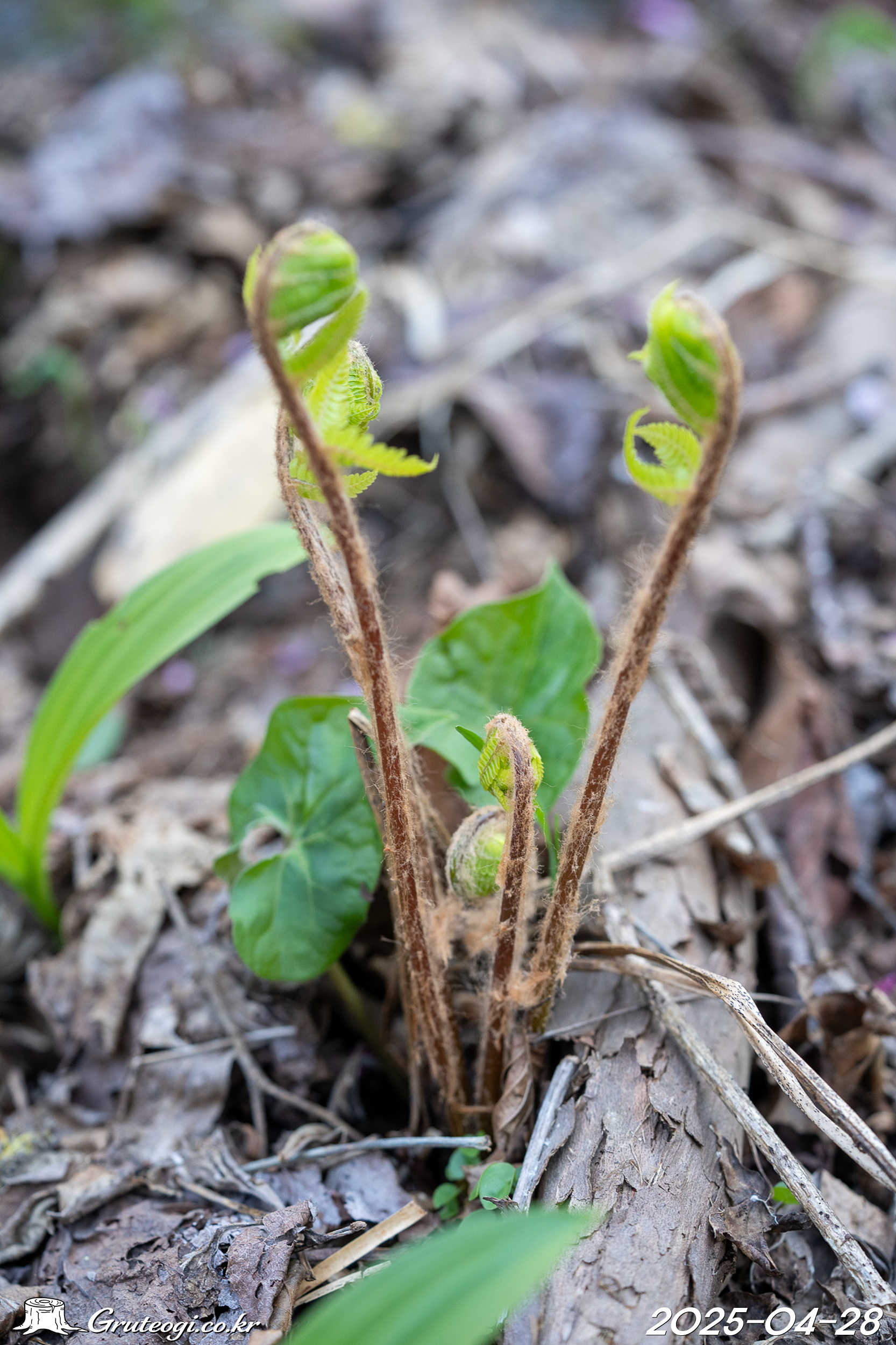
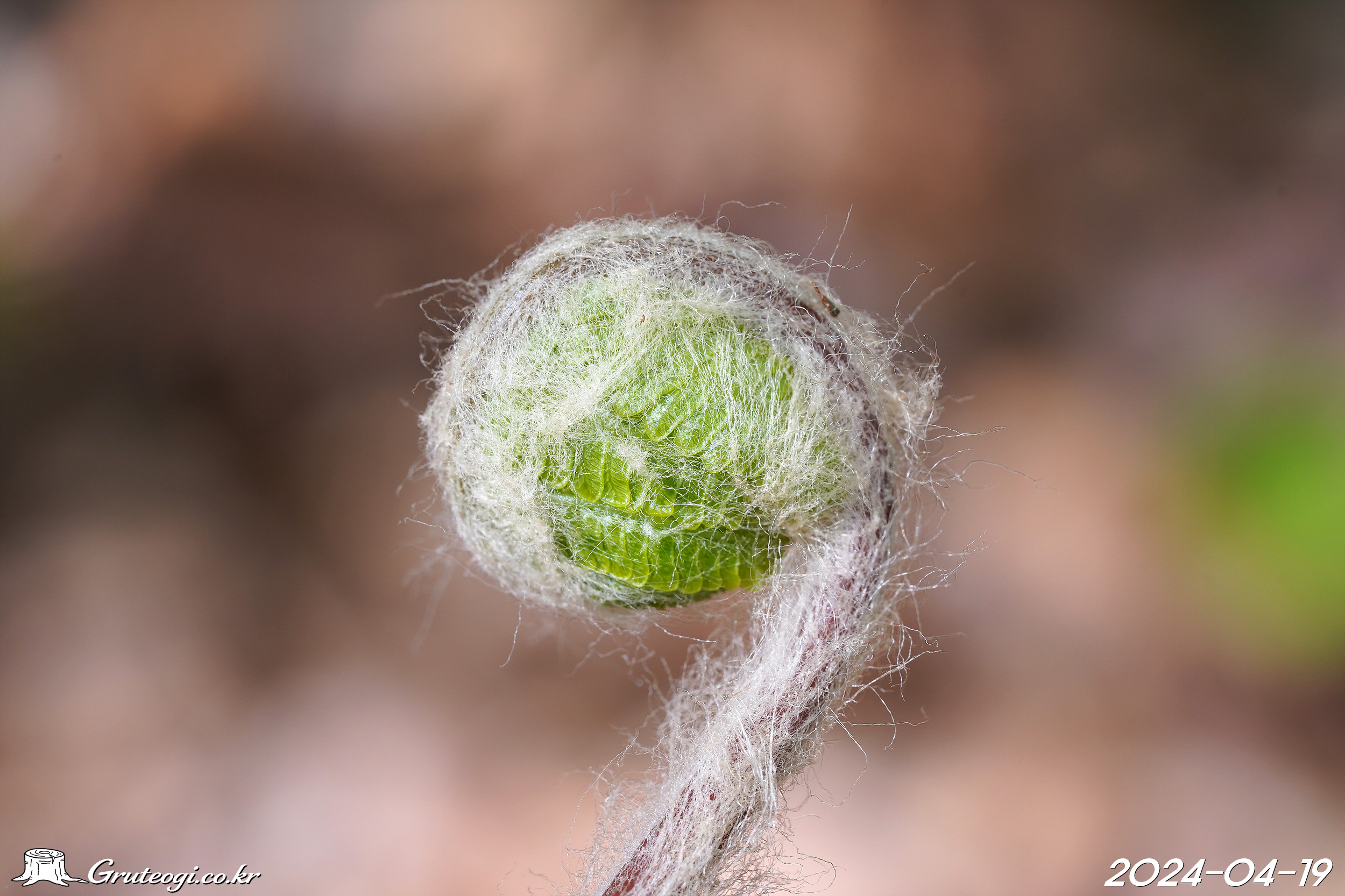
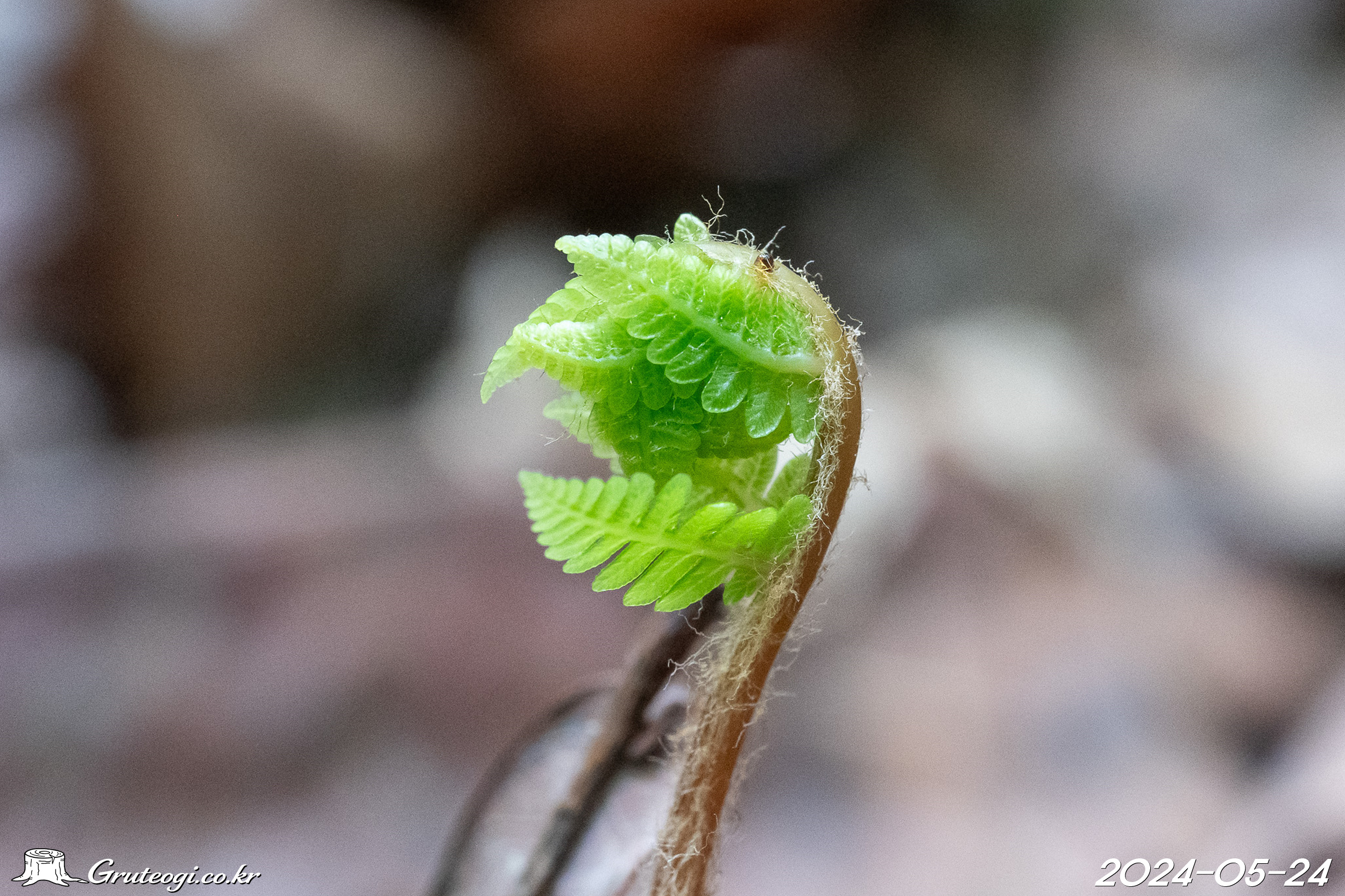
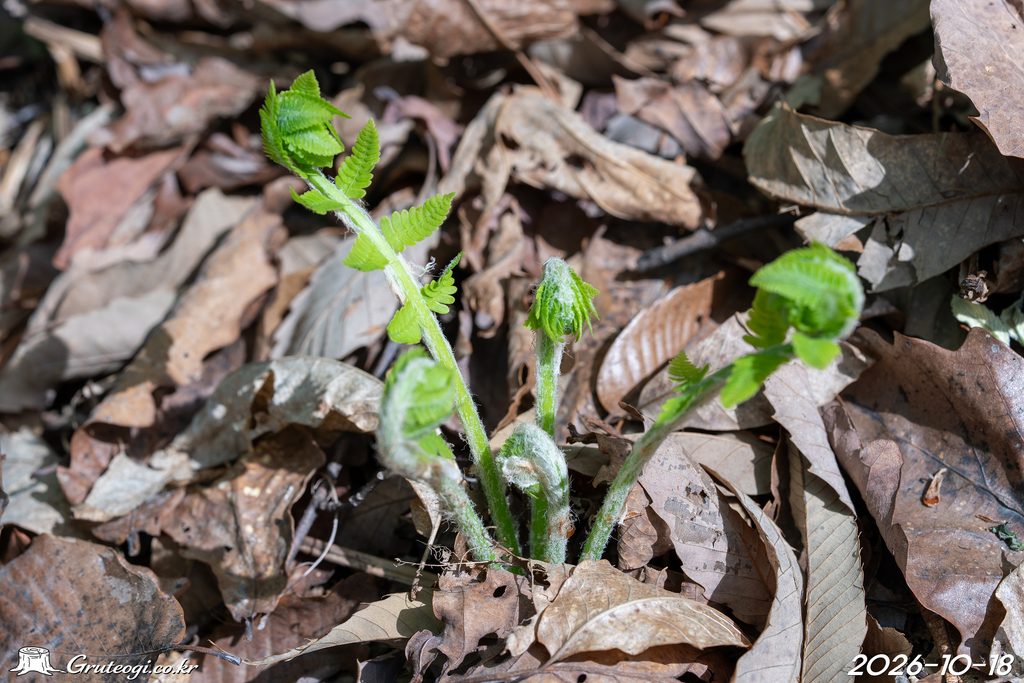
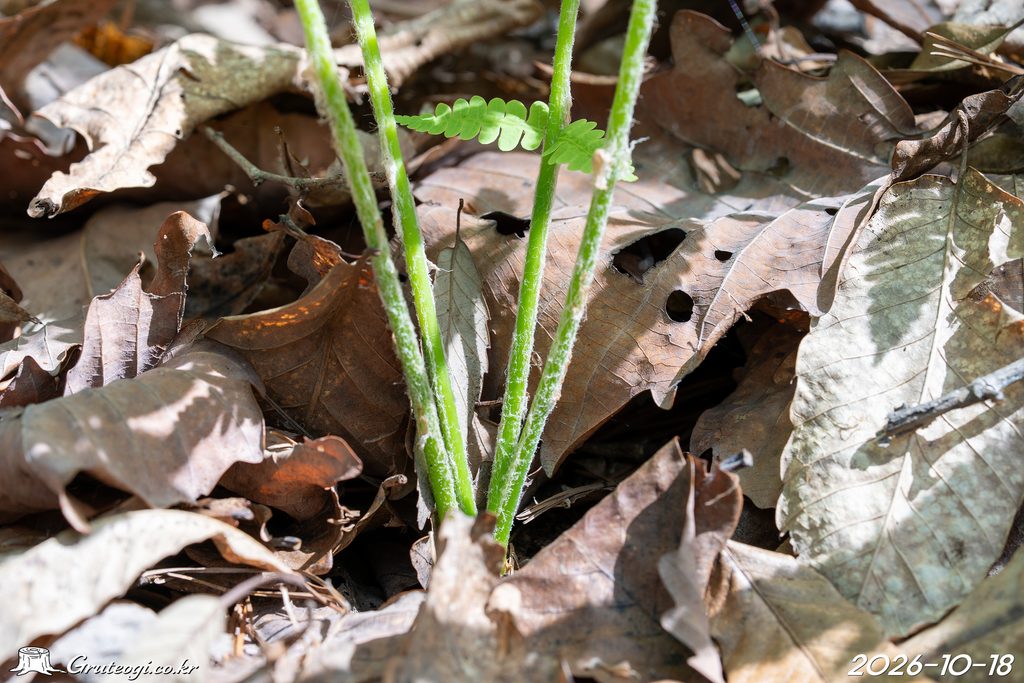
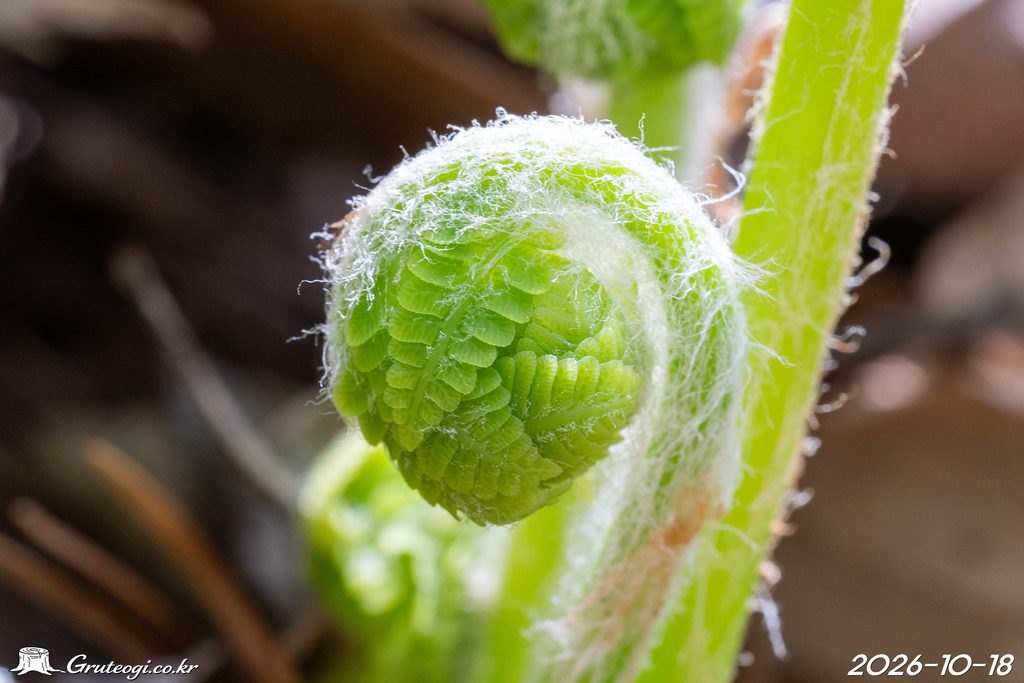
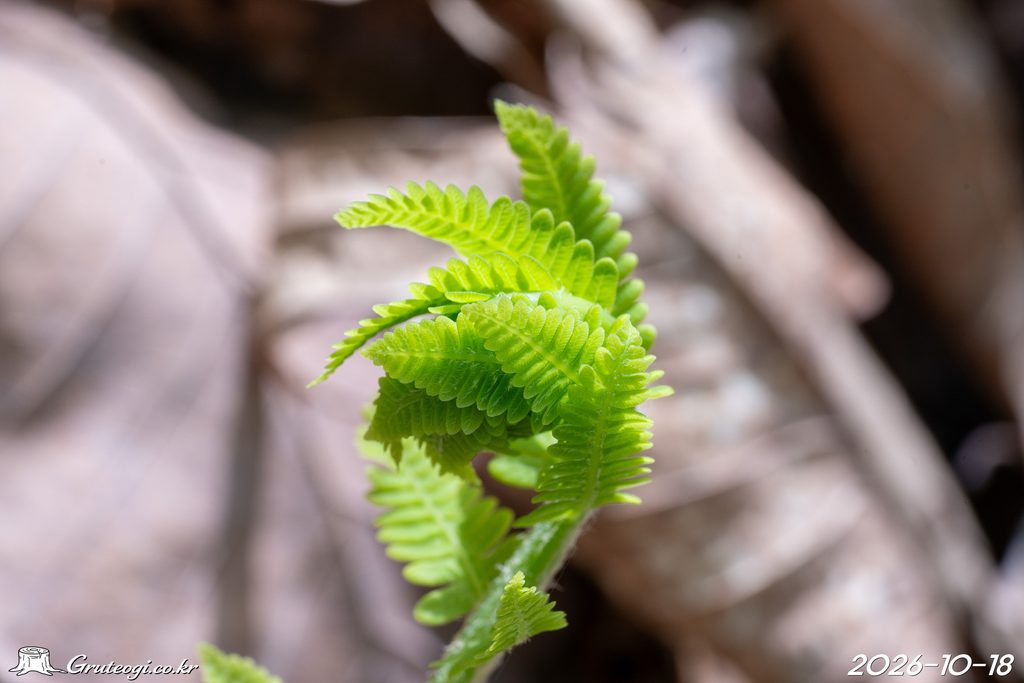
– 잎자루는 어릴 때 적갈색 털로 덮이지만 성숙하면 털이 탈락한다.
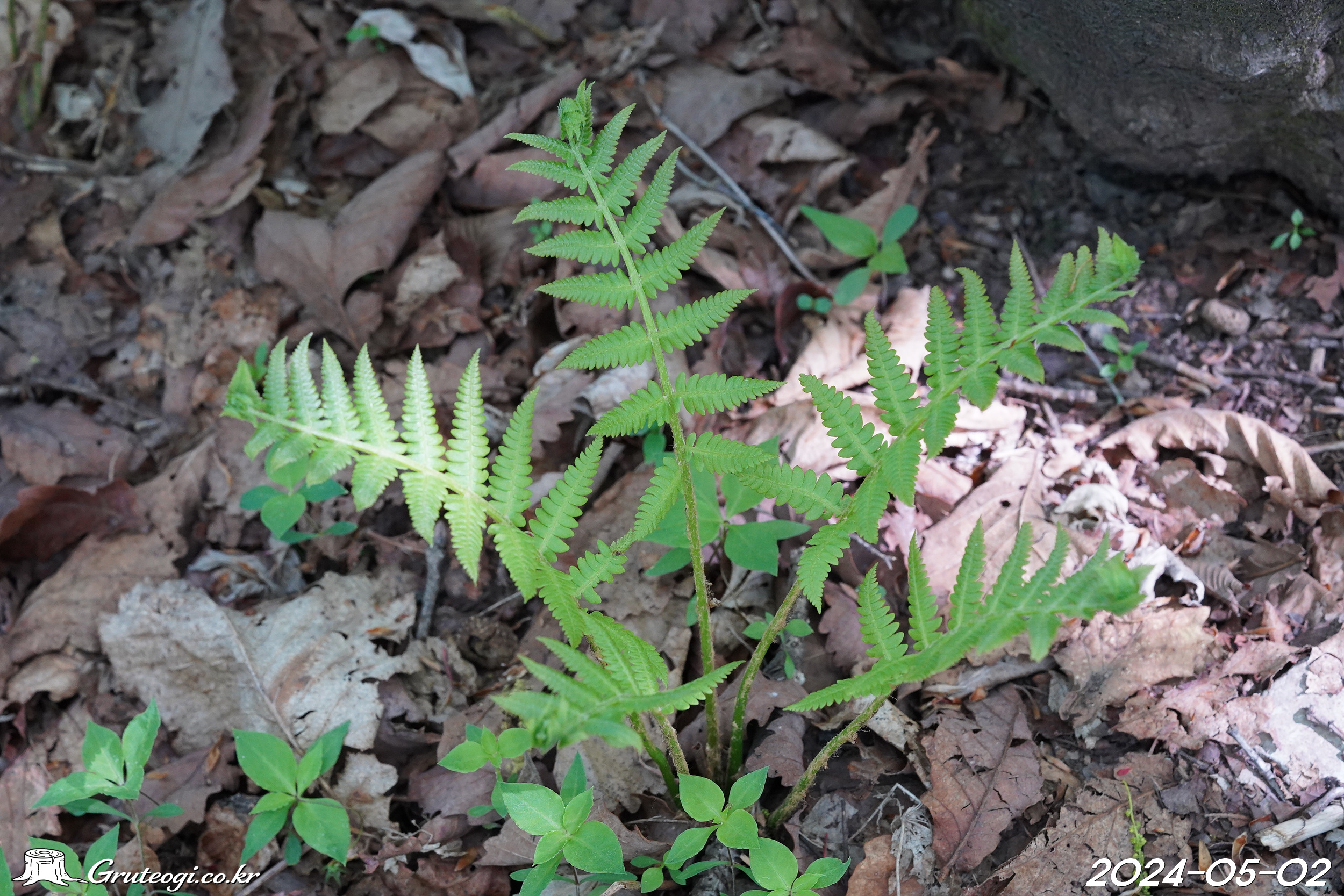
– 영양잎은 난형에서 피침형이며, 깃꼴로 깊이 갈라지는 1회깃꼴겹잎이다.
– 영양잎은 길이 0.5~1m, 폭 15~20cm이고 황록색이며, 어릴 때 적갈색 털로 덮인다.
– 깃꼴잎은 직각으로 붙고 자루가 없으며, 길이 5~17cm, 폭 1.5~3cm이다.
– 깃꼴잎은 깃 모양으로 갈라진다.
– 갈래조각은 끝이 둥글고 가장자리가 밋밋하다.
– 포자잎은 영양잎보다 짧다.
▪ Sporangium
– 포자낭은 붉은 갈색이며 포막과 환대가 없다.
– 포자낭은 세로로 터진다.
■ 분포
Korea: 우리나라 거의 전역에 분포한다.
Outside Korea: 중국, 일본, 대만, 러시아 극동부, 북미, 중미 및 남미 지역에 분포한다.
■ 비교
고비는 잎이 1회 깃꼴로 갈라지고, 음양고비는 일부 깃꼴잎에 포자낭이 붙는 부분적인 이형성을 보여 꿩고비와 구분된다.
■ 검토 메모
꿩고비(Osmundastrum cinnamomeum (L.) C.Presl)는 Linnaeus(1753)가 Osmunda cinnamomea L.로 발표하였으며, Presl(1847)이 꿩고비속(Osmundastrum)으로 옮겼다. 과거에는 고비속(Osmunda)에 포함되었으나, 분자계통학적 연구에서 고비과의 다른 현생 분류군과 구별되는 독립적인 계통으로 확인되어 현재는 별도의 속으로 인정된다.
꿩고비의 종내 분류에 대해서는 견해 차이가 있다. 동아시아 개체군은 과거 Osmunda cinnamomea var. asiatica Fernald, O. cinnamomea var. fokiensis Copel. 등의 이름으로 구분되었다. 현재 POWO는 한국을 포함한 동아시아 개체군을 Osmundastrum cinnamomeum var. fokiense (Copel.) Tagawa로 인정하고, 북아메리카의 기본변종 var. cinnamomeum과 구별한다. 반면 Flora of China는 동아시아 개체군을 별도의 변종으로 구분하지 않고 O. cinnamomeum 한 종으로 처리한다.
동아시아 개체군의 구별 형질로 영양잎 열편 가장자리의 검은색 털이 언급된 바 있으나, 이 형질이 var. fokiense의 안정적인 진단 형질인지는 추가적인 검토가 필요하다. 실제 국내에서 촬영한 어린 영양잎에서는 열편 가장자리에 검은색 털이 확인되지 않았으며, 어린 잎자루와 잎축에는 연한 색의 털이 관찰되었다. 다만 어린 잎의 관찰 결과만으로 성숙한 잎의 털 분포나 변종의 분류학적 지위를 판단하기는 어렵다.
따라서 본 도감에서는 꿩고비를 Osmundastrum cinnamomeum (L.) C.Presl로 수록하고, 국내 개체군을 var. fokiense로 구분하는 POWO의 견해를 참고사항으로 기록한다. 종내 분류군의 형태적 구별 형질은 원기재 및 성숙한 영양잎의 추가 관찰을 통해 검토할 필요가 있다.
■ 참고자료
1. https://species.nibr.go.kr/species-detail/120000059593
2. Metzgar, J. S., Skog, J. E., Zimmer, E. A. and Pryer, K. M. 2008. The paraphyly of Osmunda is confirmed by phylogenetic analyses of seven plastid loci. Systematic Botany 33(1): 31–36. 관련 연구가 인용된 NCBI 자료.
3. Xiang, Q.-Y. et al. 2015. Evolution of the eastern Asian–North American biogeographic disjunctions in ferns and lycophytes. Journal of Systematics and Evolution. 논문 원문.
4. Yu, H. Y. and Kim, J. G. 2024. Osmundastrum cinnamomeum population differences in three habitat types in South Korea. Heliyon 10(12): e33183. 논문 원문.
5. Flora of China Editorial Committee. Flora of China. Vols. 2–3. Osmundaceae. FOC 기재문.
6. Royal Botanic Gardens, Kew. 2026. Plants of the World Online. 꿩고비 var. fokiense의 분류 및 분포.